|
Boca Raton Symphonia Accompanies Master Chorale's 'Elijah'
By Greg Stepanich
November 15, 2008
In its first concert under the hand of a new director, the Master Chorale of South Florida delivered a steroid-fueled reading Friday night of Felix Mendelssohn’s Elijah in which the drama of the text was painted in broad strokes of color and the music delivered atop nothing less than a sonic wallop from the Boca Raton Symphonia.
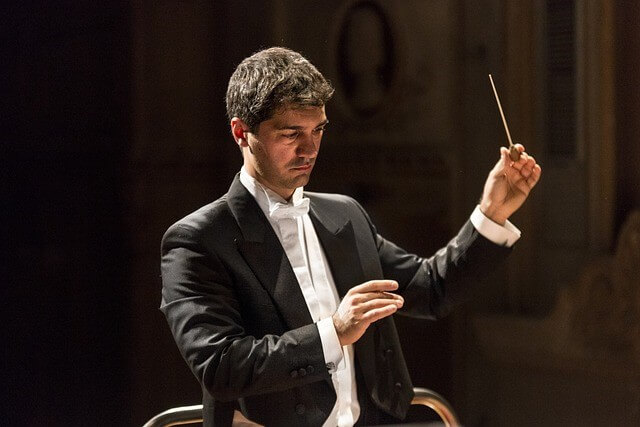
Joshua Habermann, who took over the chorus this year from founding artistic director Jo-Michael Scheibe, directed the proceedings at the First Presbyterian Church of Pompano Beach with a firm, precise hand, and he clearly enjoys the affection of his singers, who did their utmost for him.
Most noticeable in Habermann’s approach is attention to diction and dynamic detail: In the opening chorus, Help, Lord!, at the words Will then the Lord be no more God in Zion?, the words were crisp and clear, and there was a nice forte-piano effect on the word Zion.
Unity like that is important to bringing out the emotion in the text, and it paid off in moments such as The Lord has exalted thee, in Part II, where the singers made the most of the line We heard it with our ears, giving just the right sense of an excited crowd talking over each other. And it was hard to resist the big, smooth sound in the major choruses; He, watching over Israel, for instance, where halfway through the song, the entrances of each section were so liquid as to be unnoticeable, and that is choral singing of a distinctly higher order.
Of the four soloists, baritone Donnie Ray Albert had the lion’s share of the singing as Elijah, and he was a granitic presence, with a huge, creamy voice which he put through the paces of a strong theatrical instinct. It was fun to see him wheel around to the chorus of Baal worshipers and bark: Call him louder!, and to hear the great pathos he brought to It is enough, the severely beautiful aria of an exhausted prophet. He sang tirelessly and well, and as the central voice of the oratorio, he moved the action along compellingly.
Tenor Glenn Siebert has something of an Irish tenor sound to his essentially lyric instrument, and it made for very pleasant listening, especially in the aria If with all your hearts. Mezzo-soprano Hannah Sharene Penn’s dark, round sound was particularly effective in the arioso Woe unto them who forsake Him.
Soprano Angela Cadelago sang well, adding a nice, pleading touch to Hear ye, Israel, but she was underutilized. This Elijah was given with far fewer cuts than other performances I’ve heard, and the excisions here — the widow with the sick son in Part I, the second half of Hear ye, Israel, and the pretty quartet in Part II, O come, everyone that thirsteth — eliminated most of the other soprano work, and were basically pointless given that virtually everything else was kept.
With the intermission, the concert lasted about two hours. Lengthening it by another 10 minutes wouldn’t have bothered anyone, and Cadelago would have had more to do.
The Boca Raton Symphonia was most impressive Friday night, mirroring the chorale’s intense engagement in Mendelssohn’s colorful score. The brass section was exceptionally muscular, the horn section most of all, and when the whole ensemble — chorus, orchestra, organist Mark Jones — was going all out in the resonant Pink Church acoustics, it was easy to understand, and identify with, the passion for oratorios that seized Victorian audiences in the 19th century.
But it wasn’t only about brute force. The orchestra was equally at home in the quietest sections of the piece, such as the mournful clarinets against hushed strings in Hear ye, Israel, or the plangent cello solo in It is enough. The ensemble played well enough to ramp up the appetite for its season, which begins Dec. 7, and to provide reminders of the old Florida Philharmonic at its best (that group’s former director, James Judd, was in the audience Friday night).
There were some trouble spots Friday night: the first quartet after Help, Lord!, was quite weak, and in general the male voices, particularly in the lower regions, are underpowered, as they have been in the past. Still, things look promising for the Master Chorale in this new season. I like most of all the energy Habermann brings to the group; this Elijah was more powerful, more emotional, more involving, then any I’ve heard in a long time. There was little trace here of the reverent churchiness that often attends this music.
This version was more like opera, and it was more interesting because of it. |